This portfolio is password protected. Enter the password to continue.
Incorrect password. Please try again.
A frictionless, voice-first ride-booking experience that takes people from request to confirmed dispatch in seconds.
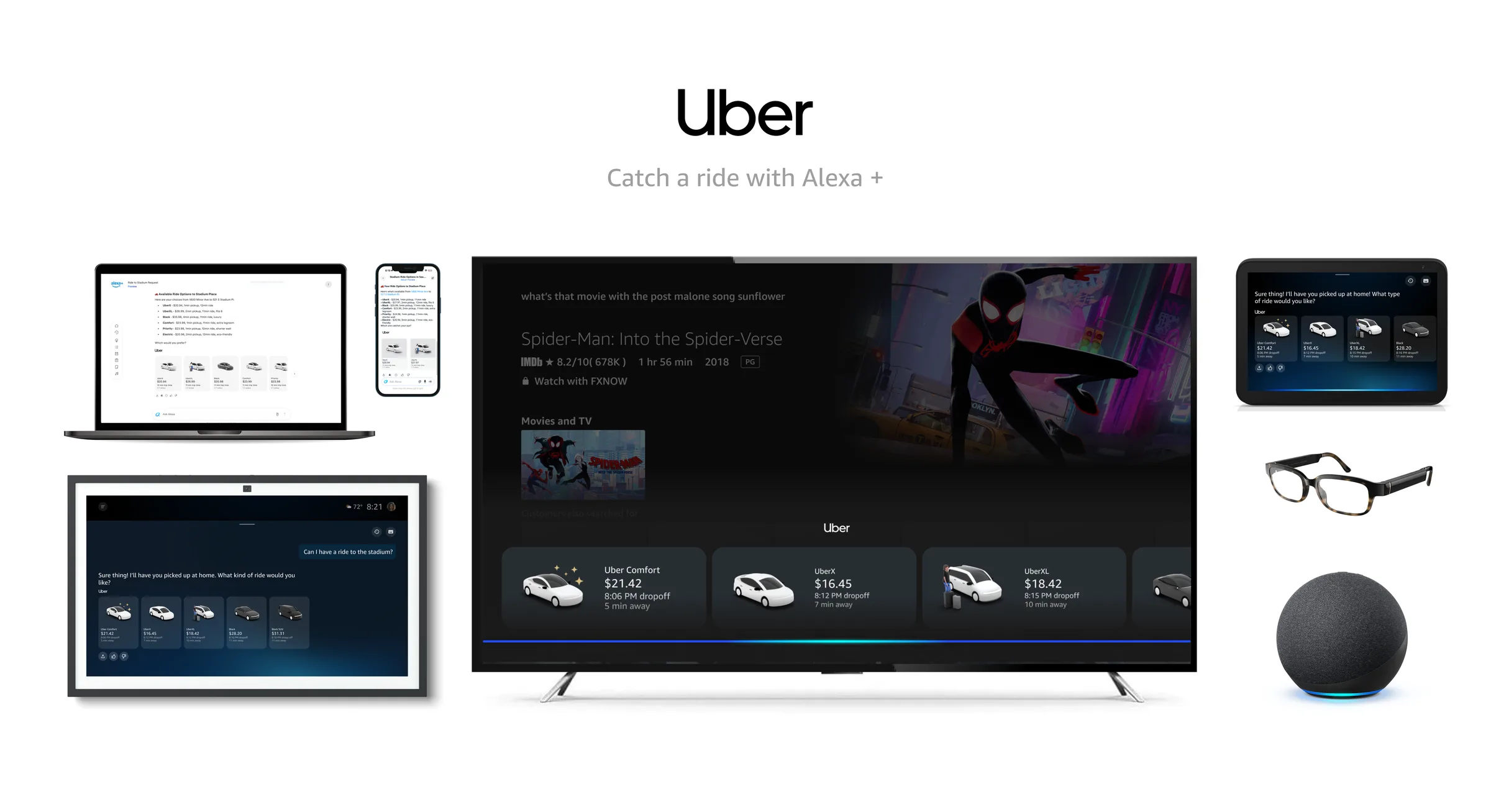
I designed the rideshare template for Alexa+, Amazon's new LLM-powered assistant, with Uber as the launch partner. It understands natural language across voice and touch, pulls in personal context, and lets people book a ride in under 10 seconds.
A smarter Uber experience
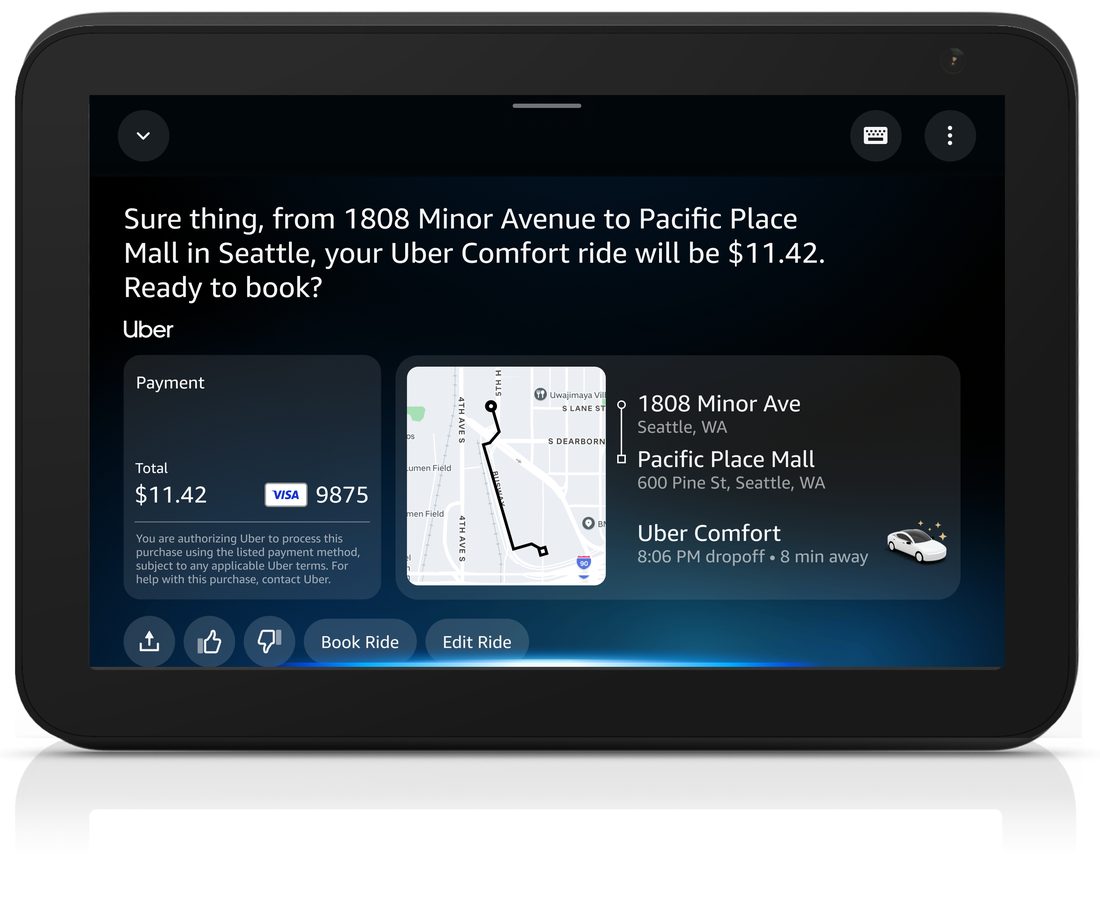
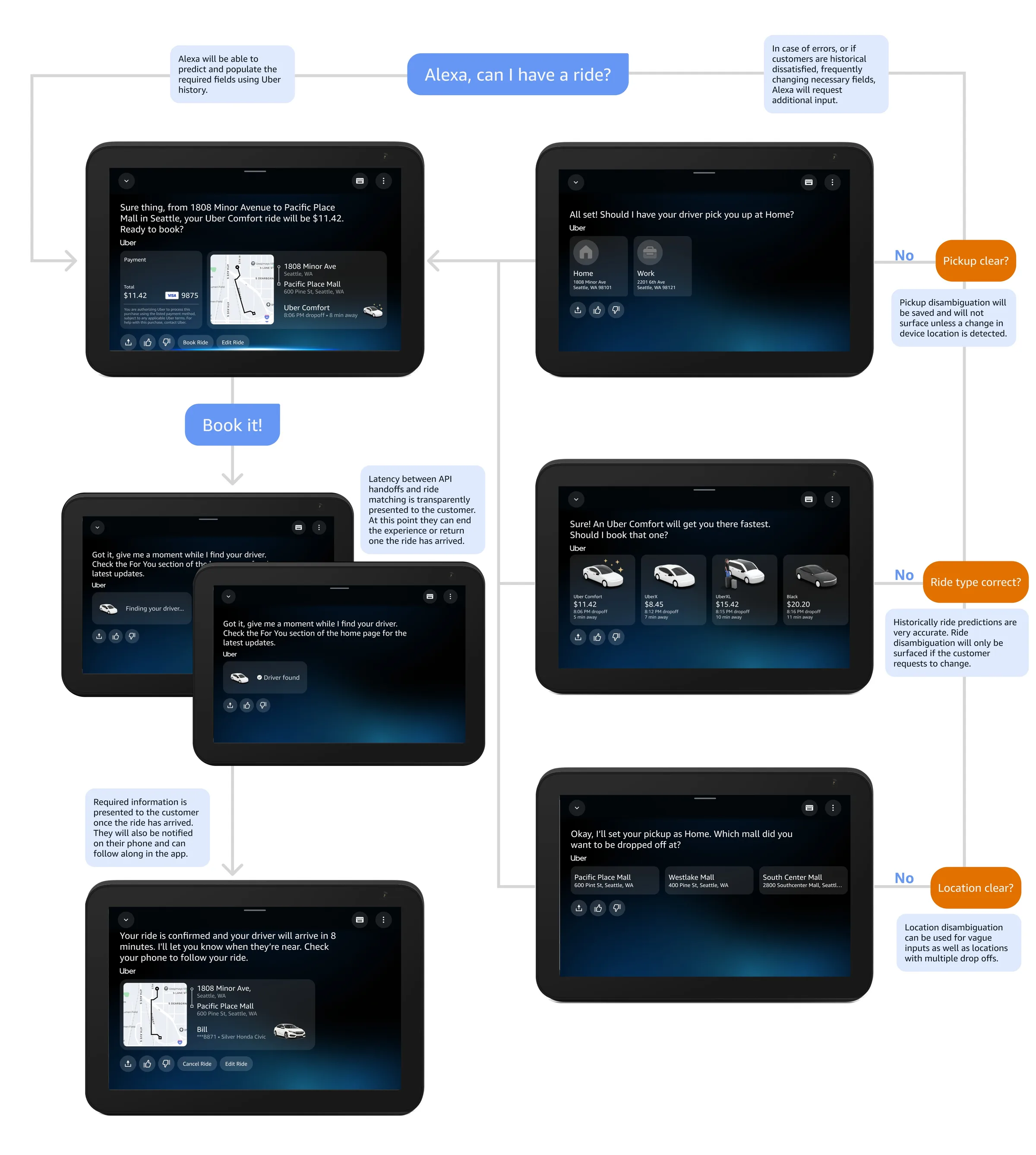
Alexa predicts pickup, drop-off and ride type from past trips and location, so most rides need no follow-up questions.
Designed the first purchasing experience for Alexa+, one of the earliest transactional voice-commerce flows of its kind. It grew to become the #1 most-used third-party capability on Alexa+, driving 30 million+ invocations, and set the interaction patterns other teams now build on for voice-based commerce.
Uber on Alexa+ is live, and the experience has since been extended to  , bringing Alexa+ to 100% of the US rideshare market.
The Uber app is built for deliberate, touch-first use. On an ambient smart display, that approach breaks down in three ways:
High Interaction Cost
A basic request takes 4 taps, and 8–12 taps once anything changes.
Contextual Inflexibility
Existing voice skills use rigid slot-filling and can't handle real conversational turns.
Visual Load
Booking keeps eyes on a phone for 30–60 seconds, the opposite of hands-free.
I ran Rapid Iterative Testing and Evaluation (RITE) with a Wizard-of-Oz prototype, with participants who own a smart display and use rideshare regularly. The goal: learn how people hand off between voice and touch, when Alexa should assume rather than ask, and what they need after booking.
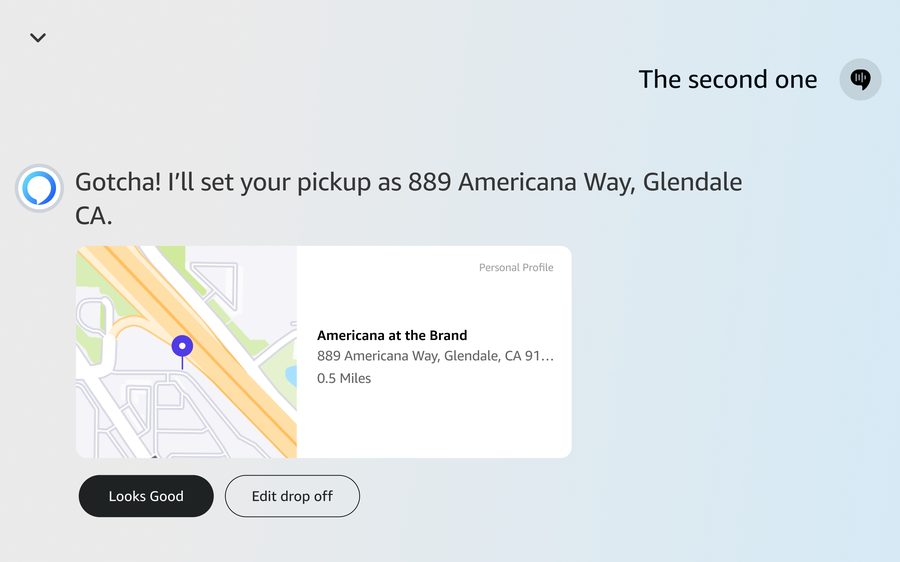
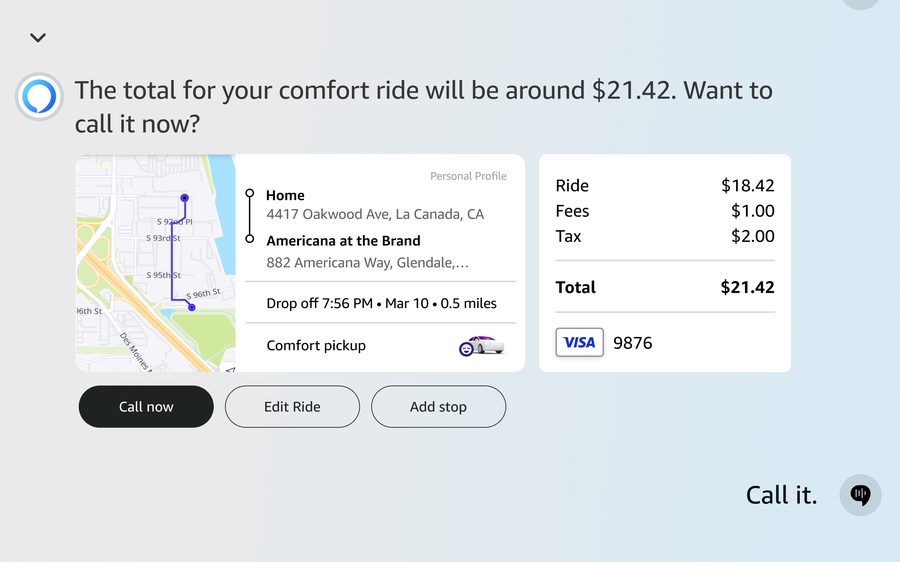
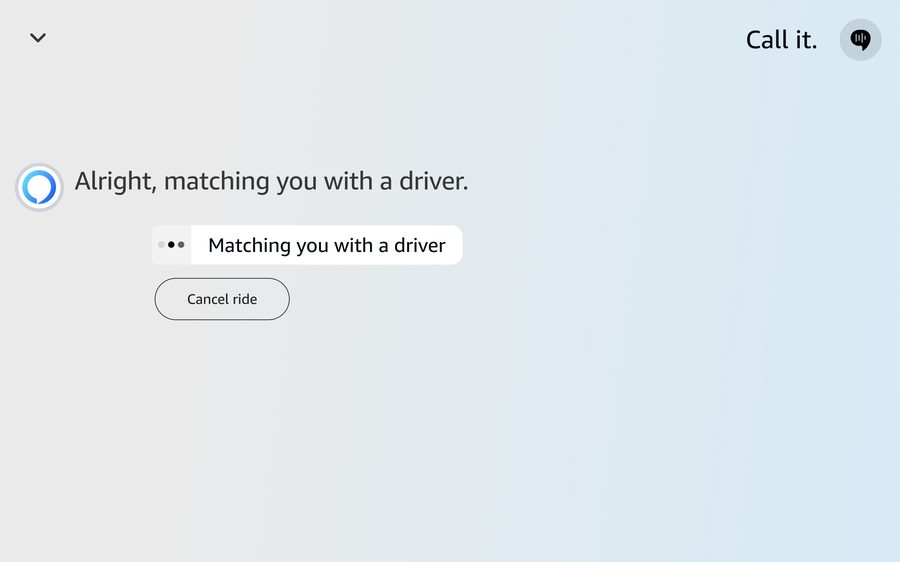
A request like "take me to the mall" can be inferred from location and past trips, so Alexa assumes the likely match and confirms it at the final step instead of asking up front. We also renamed "Call now" to "Book Ride" so the commitment is clear.
A driver-arriving alert is useless on a display in another room. Time-sensitive updates need to follow people to their phone.
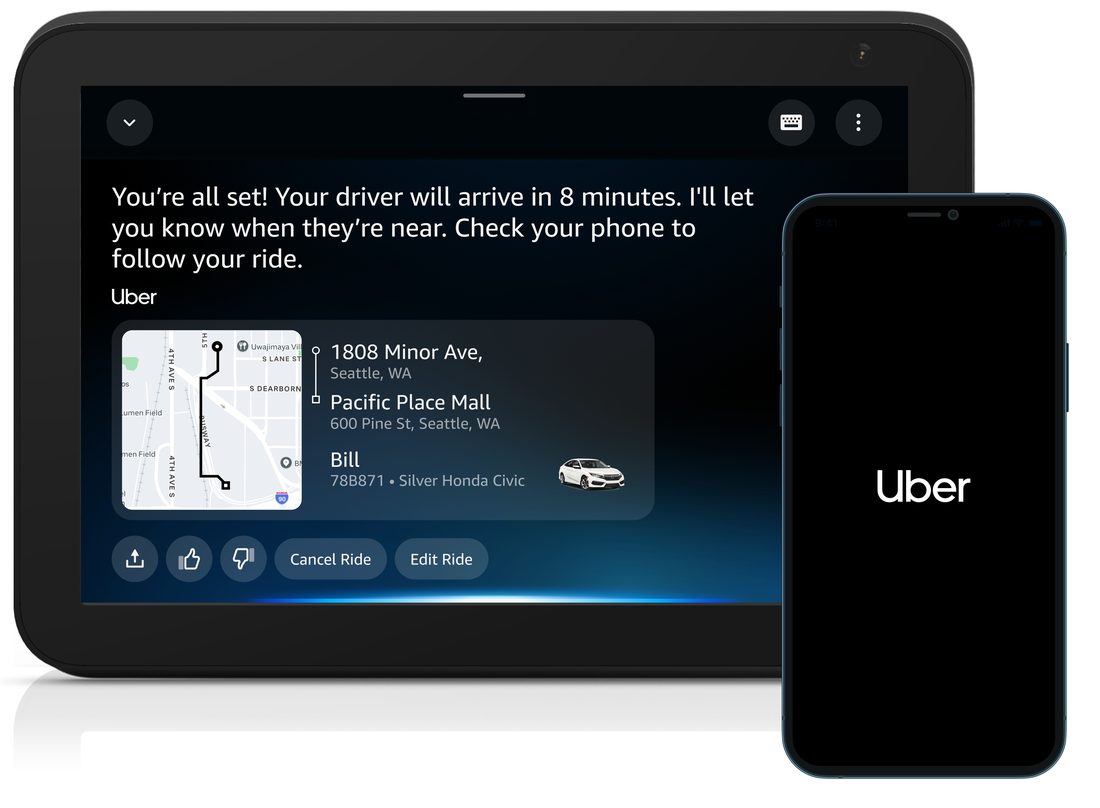
People walk away right after booking, so the last screen shows the car photo, license plate and destination to let them leave with confidence.
I partnered with product, engineering, design systems, legal, business development, marketing and QA, and ran weekly syncs with Uber's VPs and product leads to align on scope.
I audited Uber, Lyft, Waymo, Bolt and DiDi to see which mobile patterns translate to voice, and which don't.
When no pickup is given, Alexa uses device location and account history to infer the pickup address.
Visual, high-friction tasks like route edits and live tracking hand off to the phone with the booking intact. The phone is a fallback, not the default.
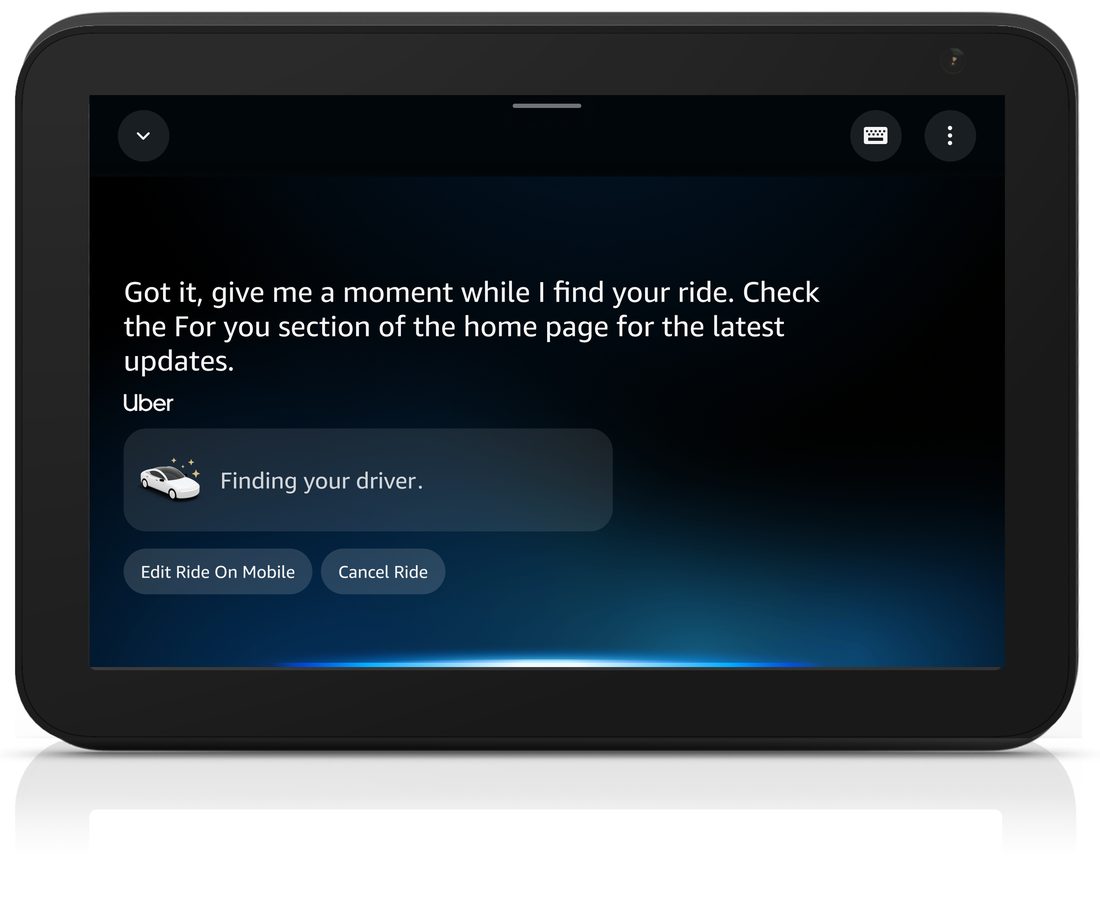
The session ends as soon as a ride is booked, so people can step away instead of waiting on updates.
Next, I'm exploring calendar-aware ride suggestions, learned routines for smarter pre-fills, and nudges when prices drop or traffic builds.