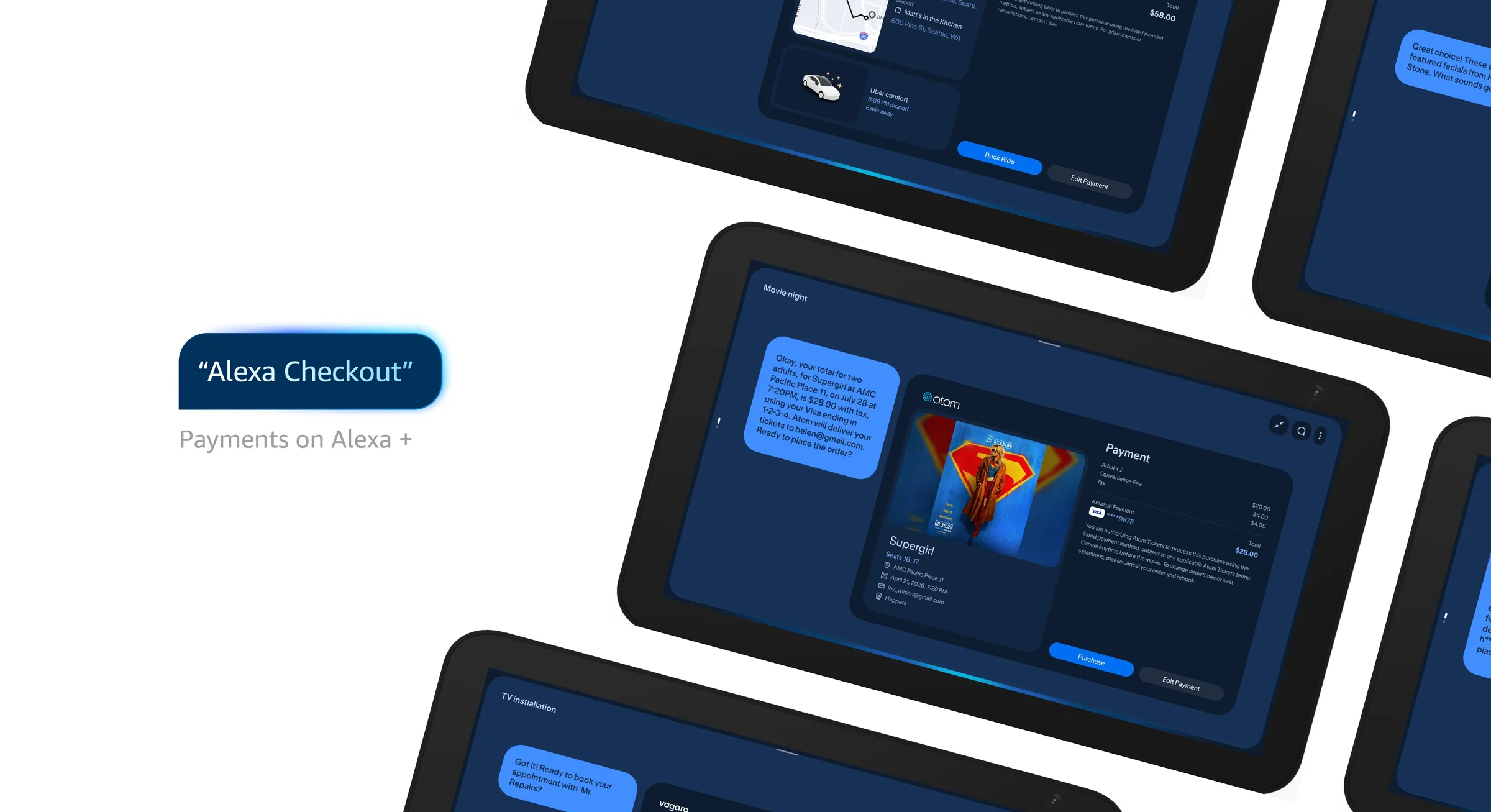
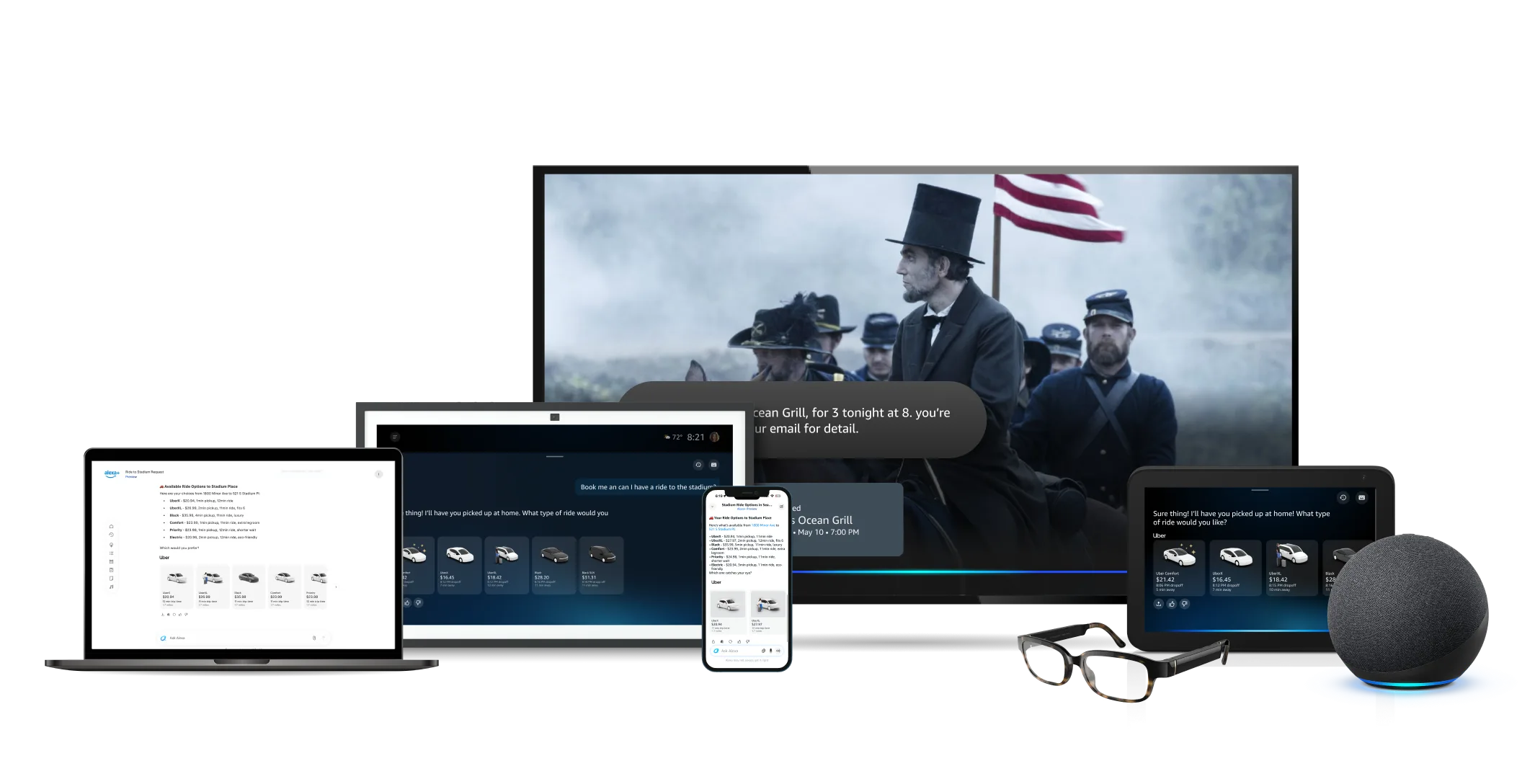
One payment template for every partner experience on the new Alexa skin.
Timeline
Design 2 weeks June 2026
My role
Lead designer User researcher
Scope
UX design UI design UX Researcher
Team
Alexa Experiences Devices and Design
Tools
Figma
Overview
Solution
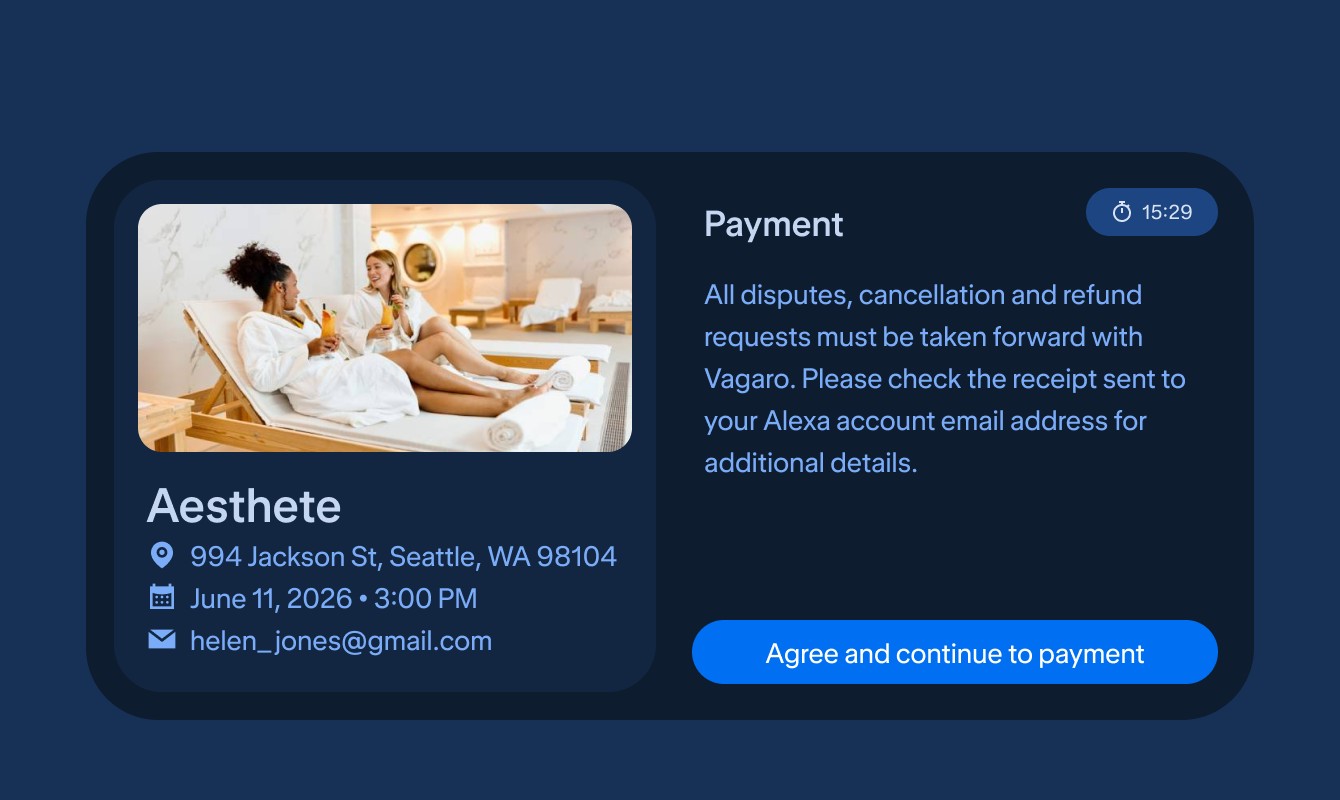
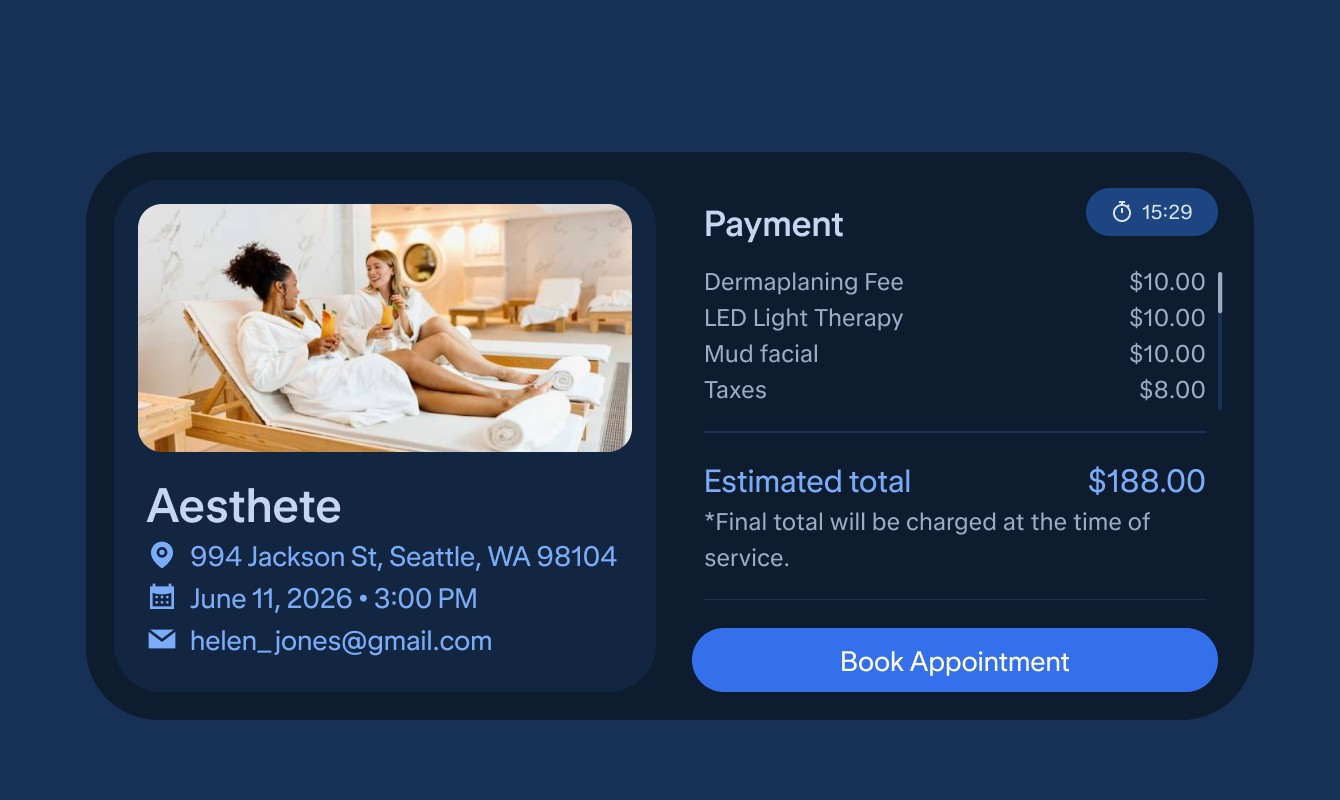
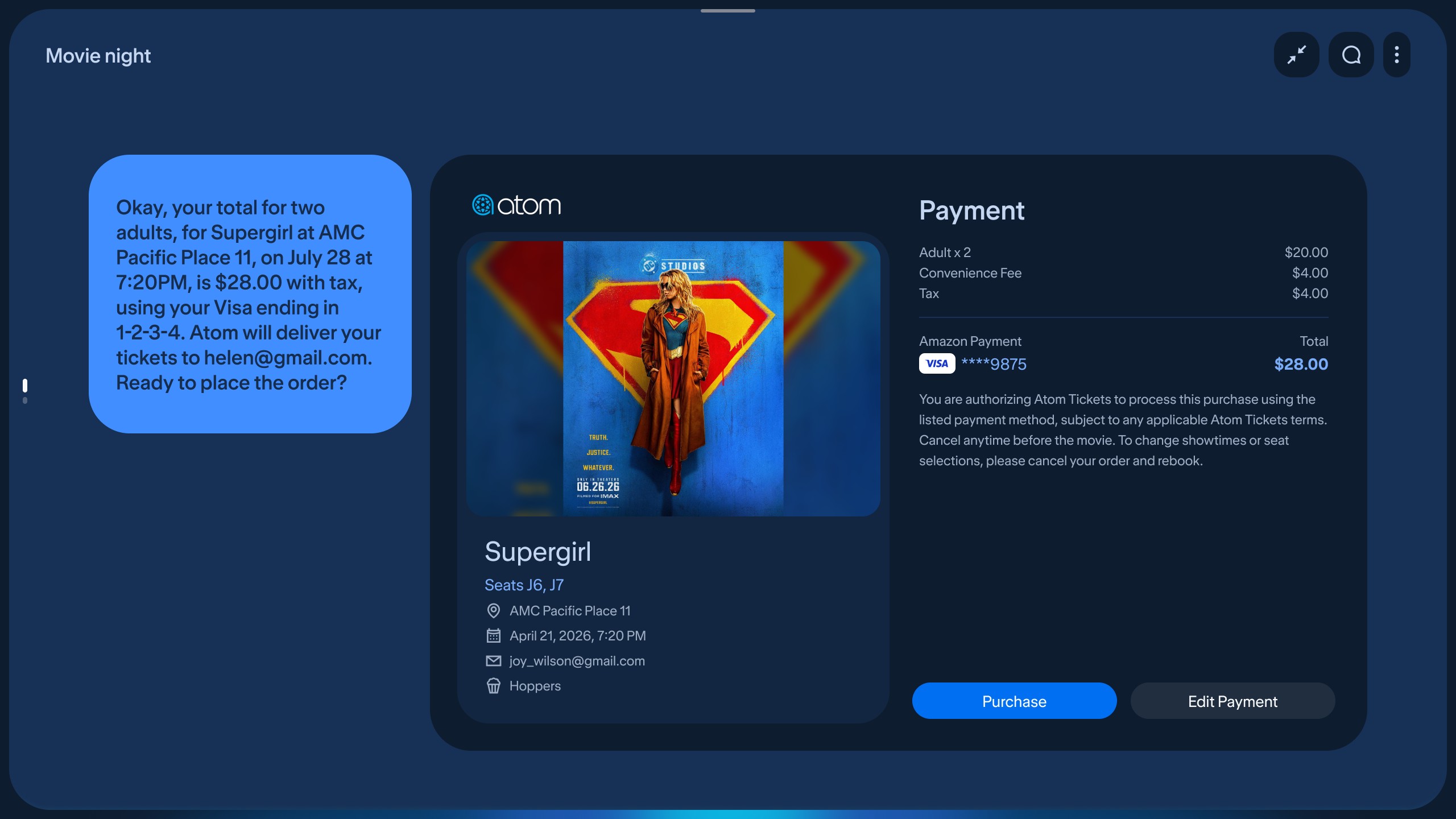
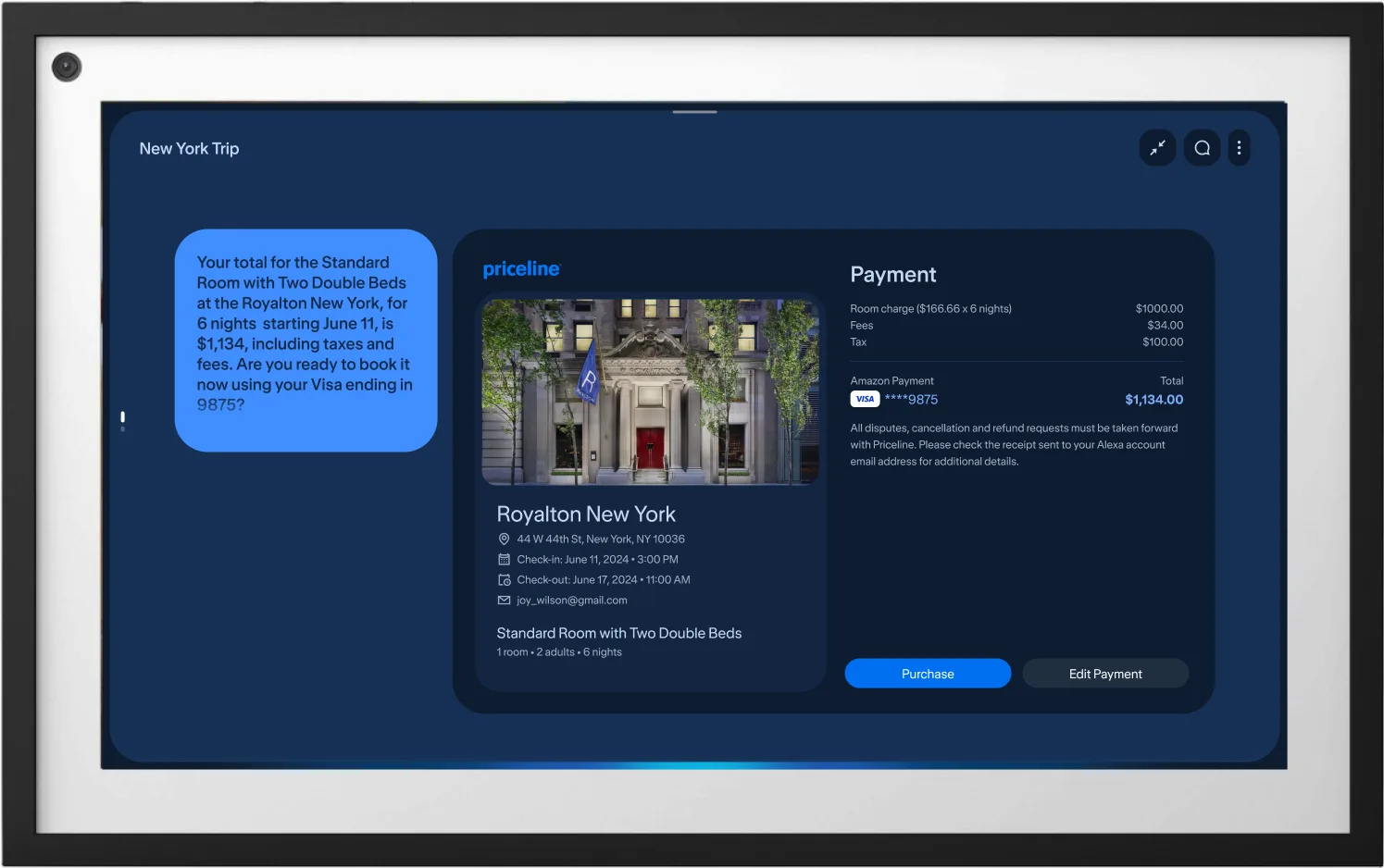
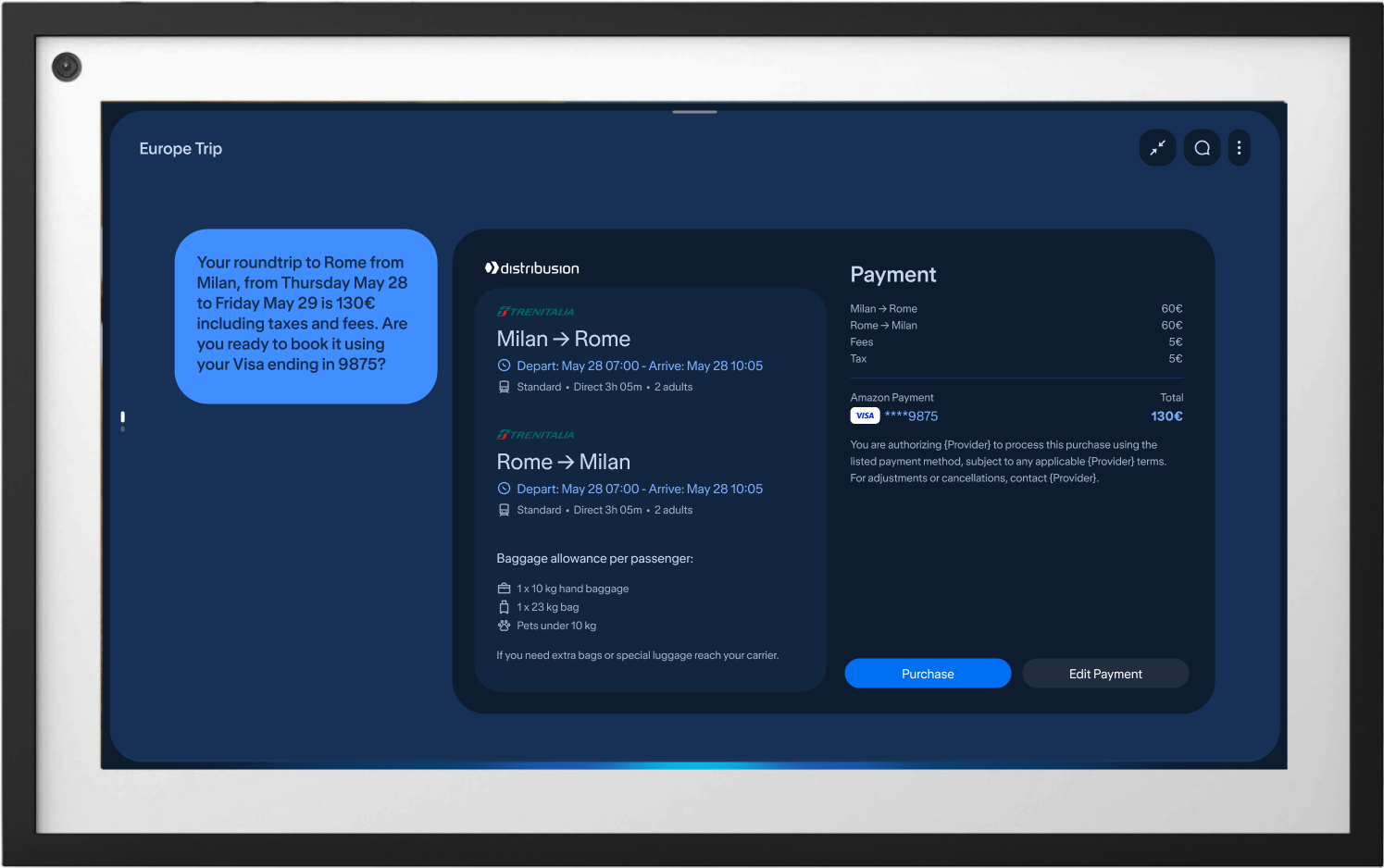
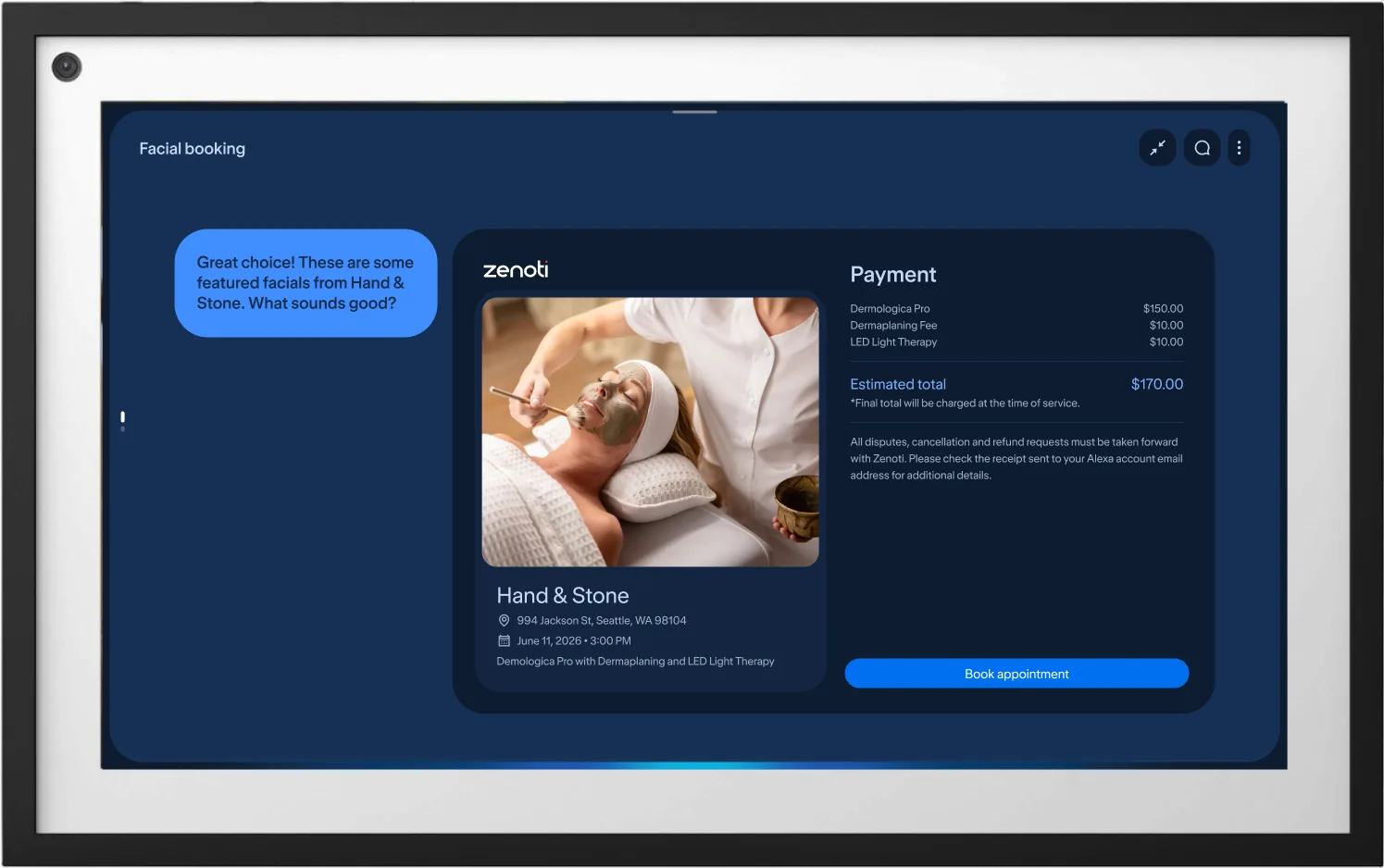
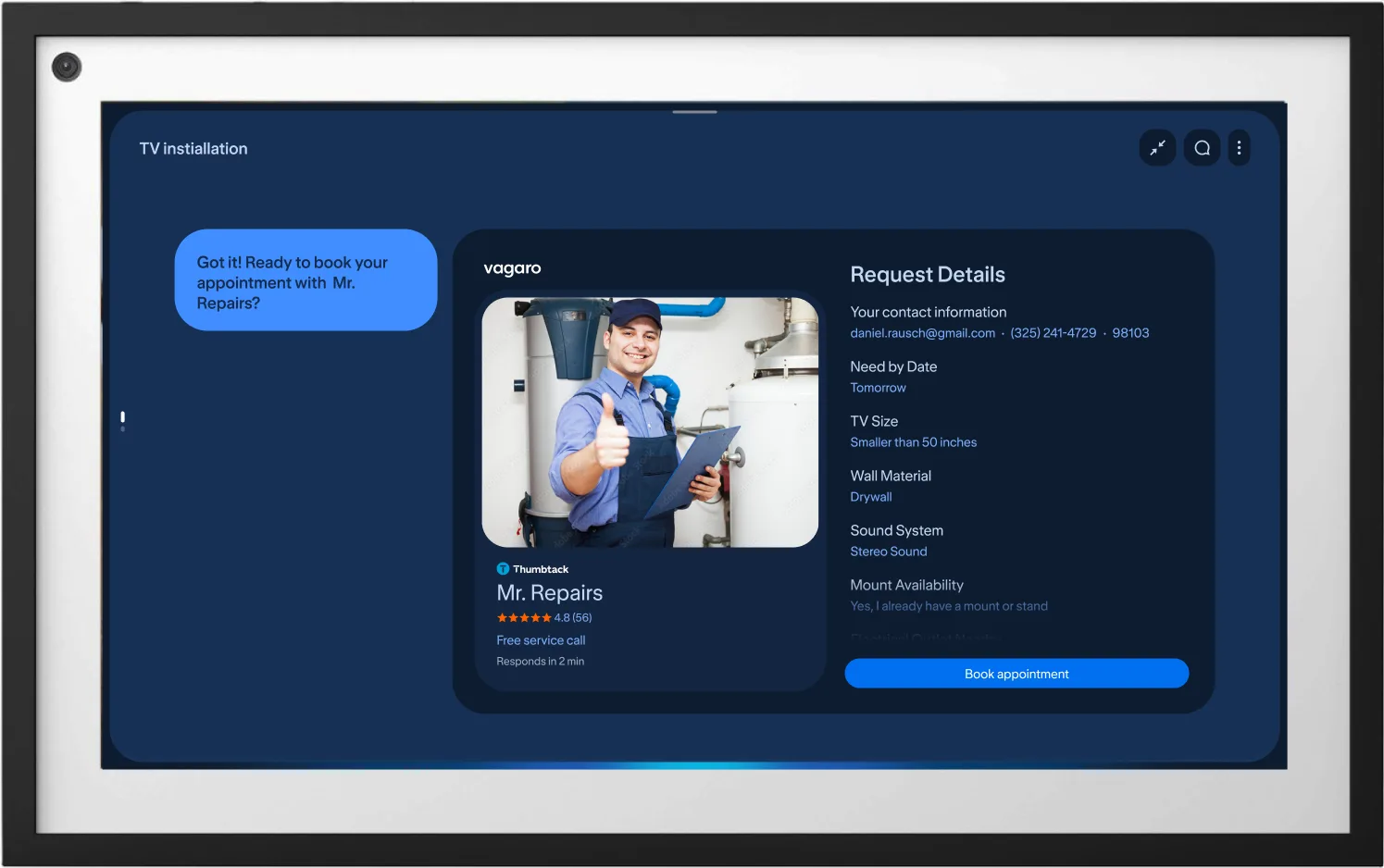
I designed one flexible payment template for every partner on Alexa+'s ambient displays. It adapts to each partner's line items, legal disclosures and hold timers without losing a consistent look and feel, and pairs voice confirmation with clear on-screen proof.
Focus on flexibility
One scalable checkout pattern standardizing hands-free commerce across ticketing, food delivery, and more.
Anticipated Impact
The template is designed to be the one payment surface across every Alexa+ vertical, rolling out in September 2026. The goals:
Faster partner onboarding: standard API mapping replaces custom, per-partner payment flows.
No forks: one adaptive layout every vertical can adopt as-is.
Faster checkout: from a typical 45–90 seconds down to 15–20 with express voice and one-click payment.
Every Alexa+ partner, from ticketing to food delivery, needs a secure checkout step. The existing payment screen hadn't kept up with expanding legal requirements, so partners bolted on one-off fixes that fragmented the experience.
Current
The Problem
Voice is fast, but people get anxious paying without seeing an itemized breakdown. And every partner brings different constraints:
Vertical Disparity
Ticketing needs seat holds, food delivery needs tipping, rideshare needs surge disclaimers, and so on.
Legal & Compliance Rules
Mandatory disclosures, deposit terms, itemized fees, age checks and local tax rules.
Distance & Ambient Constraints
Totals must be readable from 8–10 feet away, by voice or touch, on every screen size.
Multi-Vertical Flexibility
The template was architected as a universal component system, supporting dynamic data models across 8 core commercial verticals:
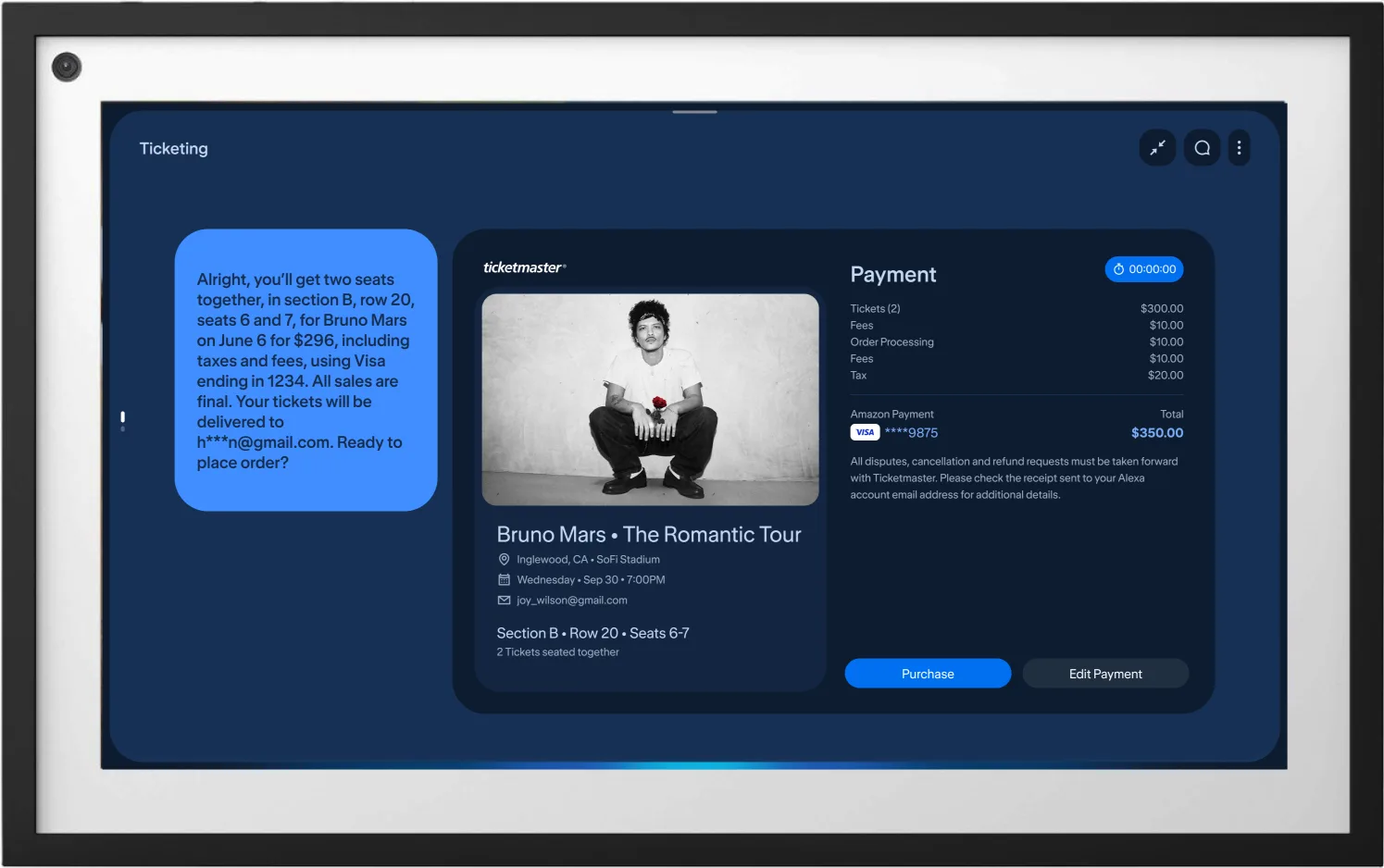
Event Ticketing
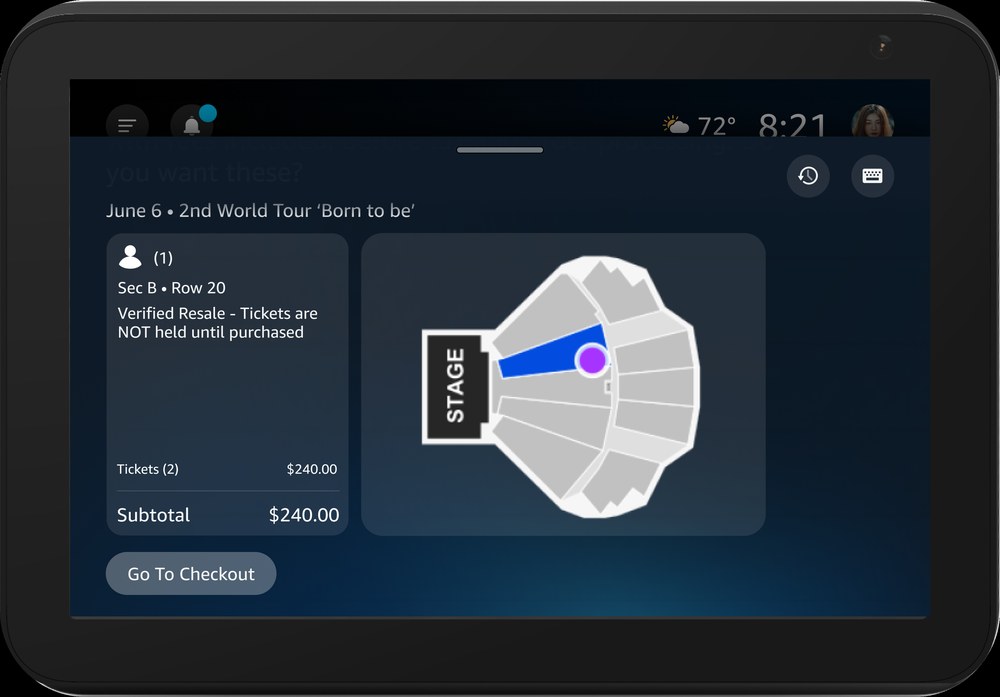
Real-time inventory hold timers
Itemized service and delivery fees
Seat-tier price breakdowns
Refund and exchange policies
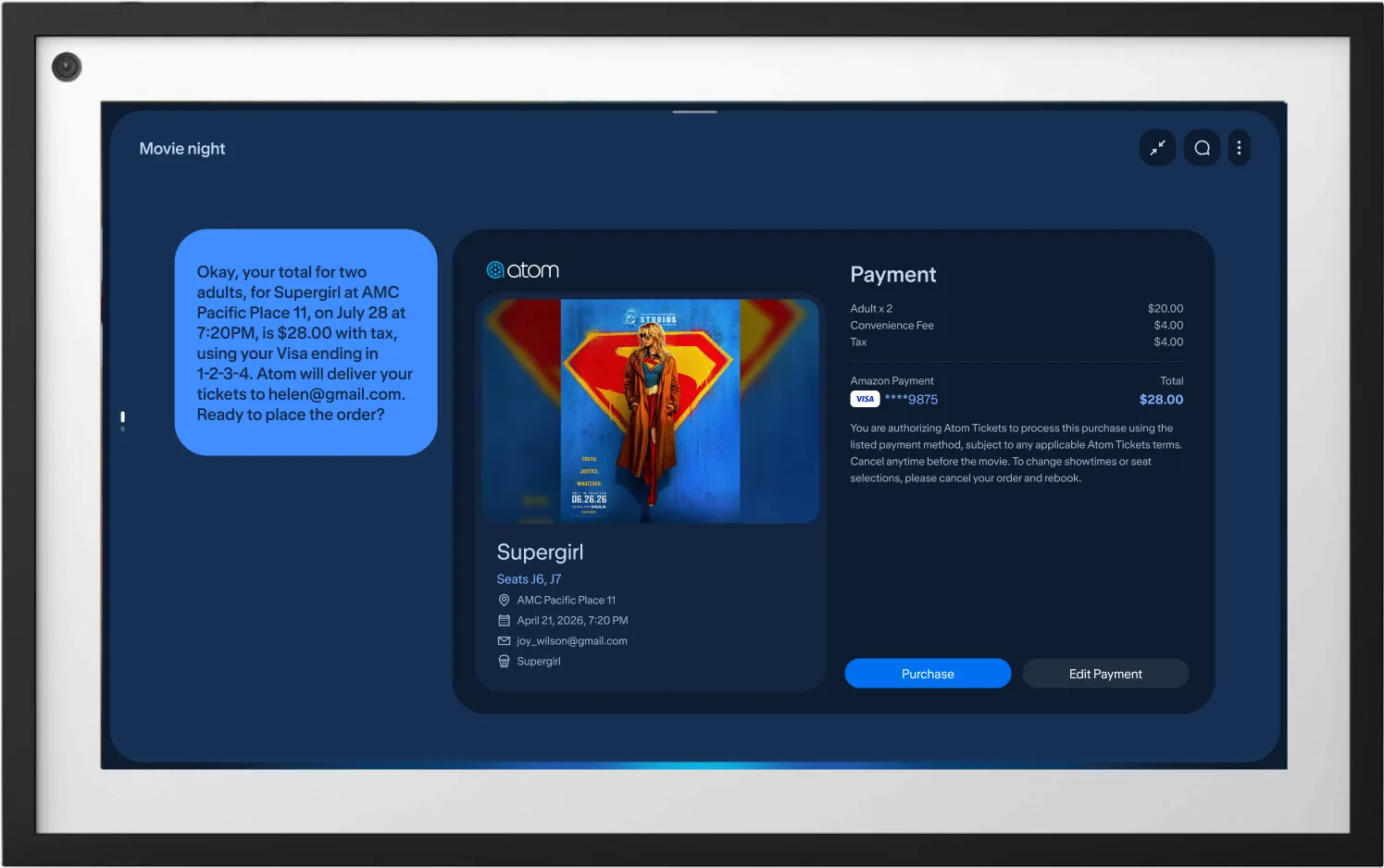
Movie Ticketing
Reserved-seat hold timers
Concession add-on pricing
Ticket types
Age-rating purchase disclaimers
Food Ordering
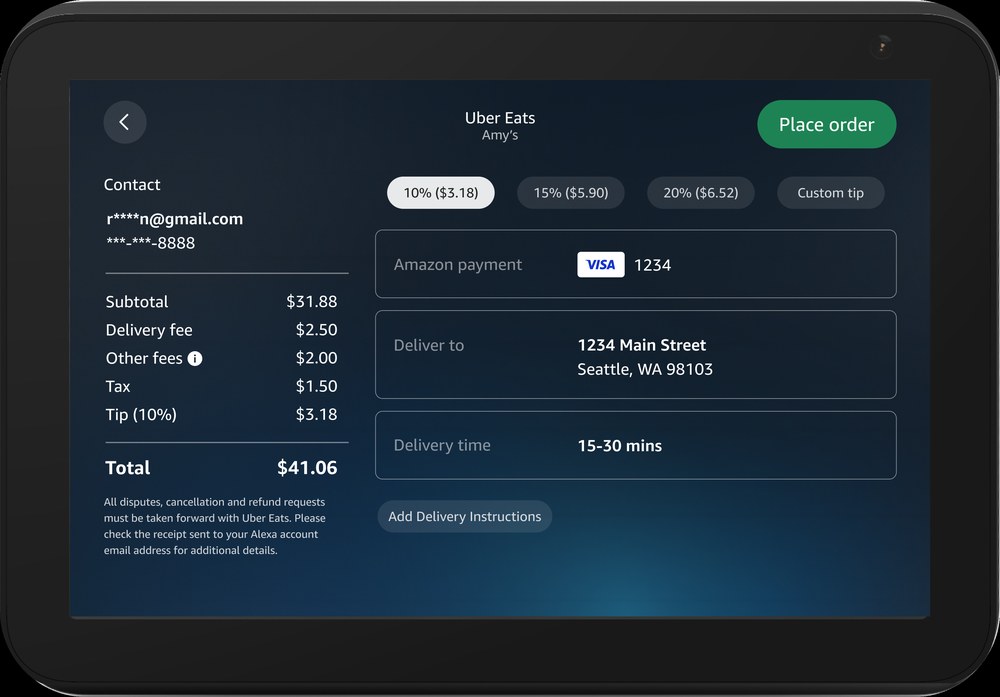
Tipping calculation and quick-select amounts
Delivery and service fee breakdowns
Order total confirmation before checkout
Special instruction surcharges
Local Booking
Time slot hold timers
Deposit and cancellation windows
Capacity-based pricing
Instructor or provider fee disclosures
Home Services
Estimated cost by service duration
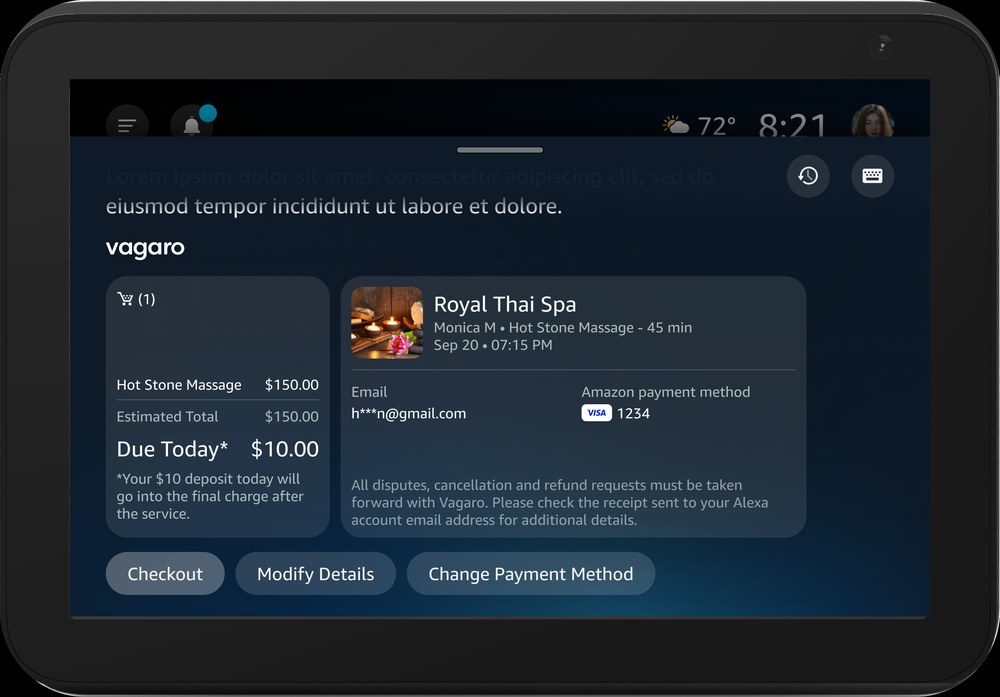
Deposit terms
Arrival window confirmation
Cancellation and rescheduling fees
Travel & Lodging
Nightly rate and occupancy pricing
Resort and service fee breakdowns
Cancellation and refund window disclosures
Check-in and check-out date confirmation
Transit & Commute
Fare class pricing
Recurring pass billing
Route-based fare disclosures
Departure schedule confirmation
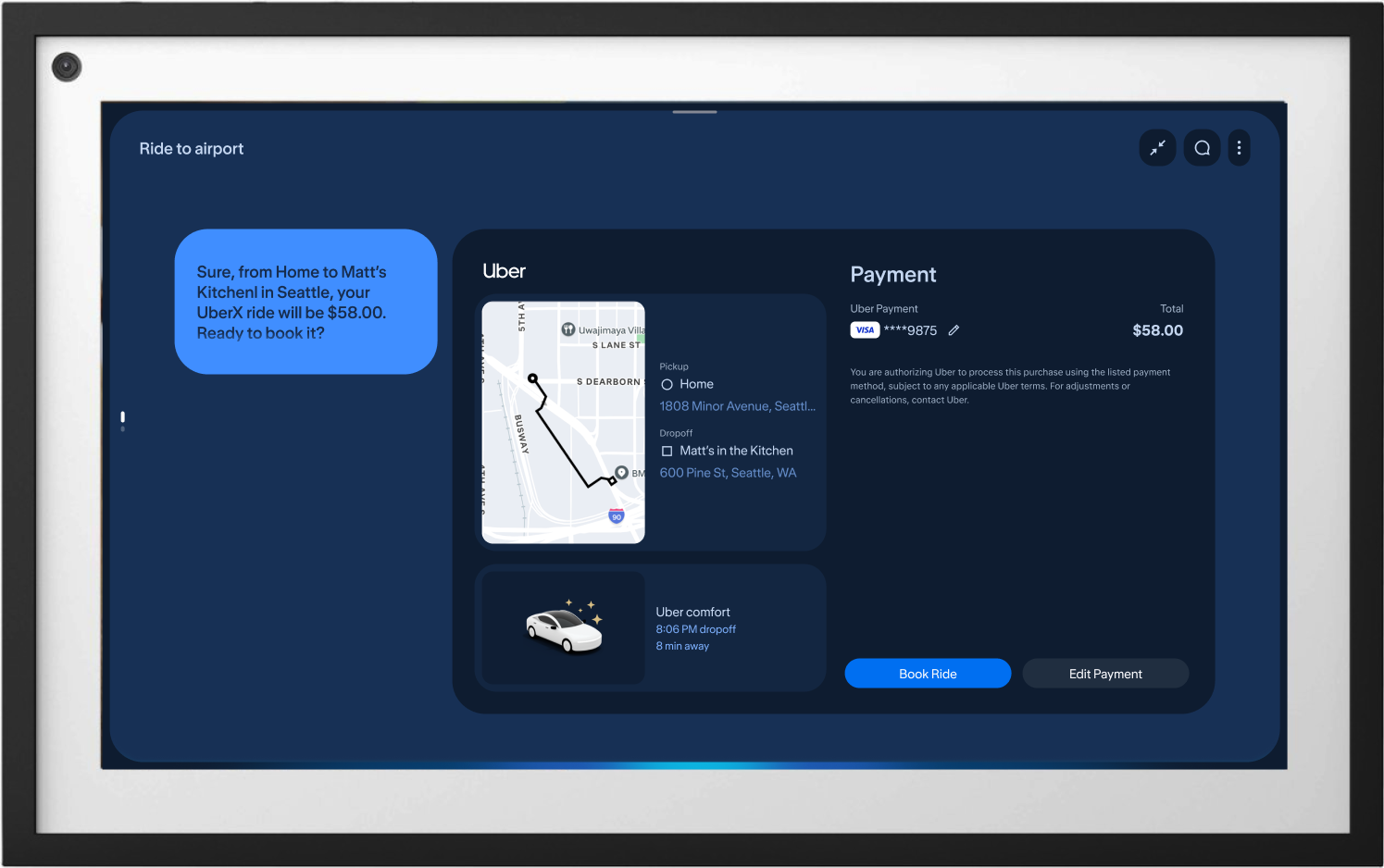
Ride Share
Dynamic surge pricing disclosures
Vehicle-class fare breakdowns
Route preview cost estimate
Pickup and cancellation fees
Consolidated Feature Requirements
I consolidated partner, legal and CX requirements into one list, which became the reference for aligning teams and defining the modular component system:
Feature
Requirement Type
Description
Notes
Attribution
Partner requirement
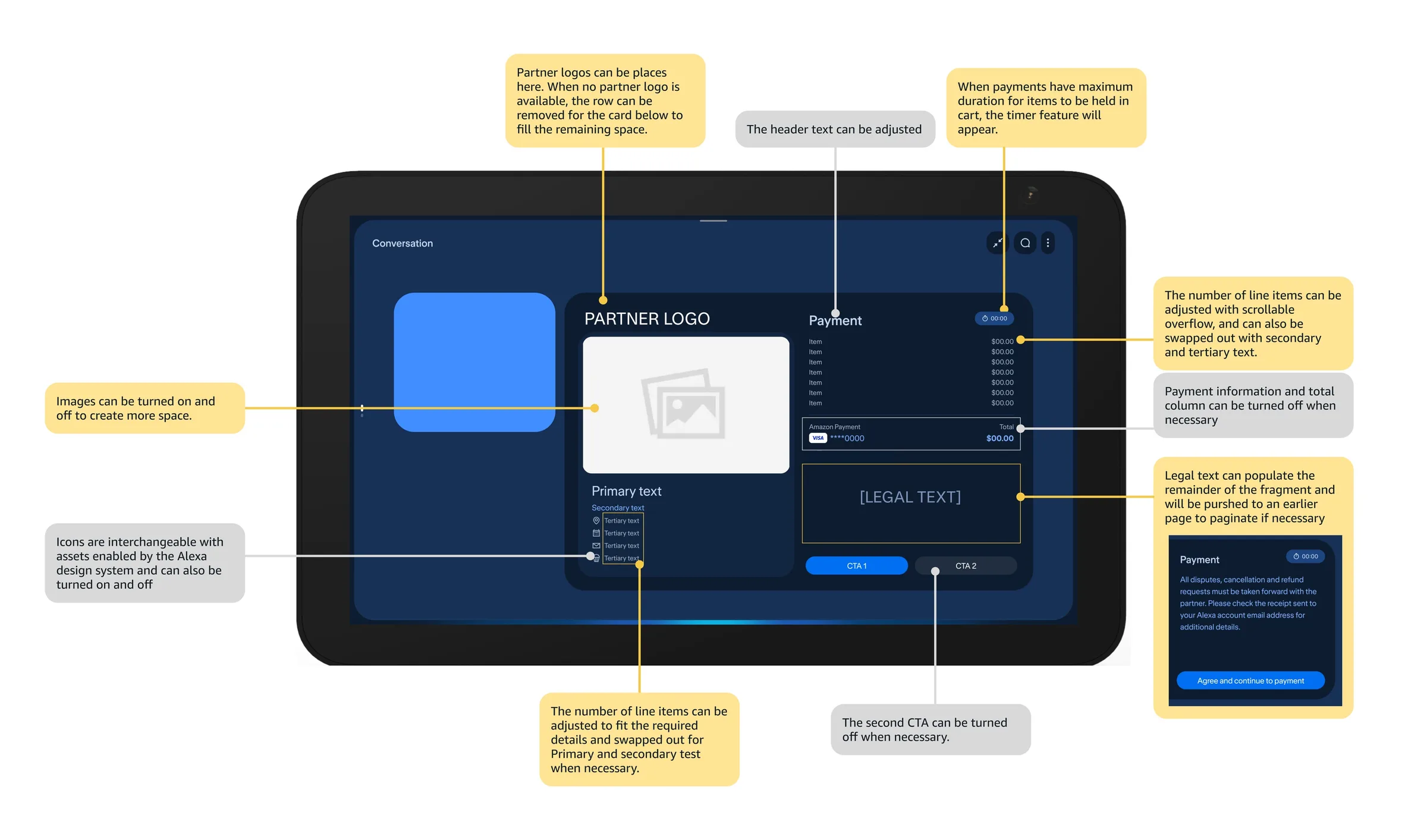
Partner logo and branding shown at the top of the checkout surface.
Kept in a fixed position and size across every partner integration.
Line items
Universal requirement
Itemized breakdown of every item or service in the order.
Universal requirement across every vertical.
Payment information
Legal requirement
Displays the card or account being charged.
Card details must be visible before purchase confirmation.
Payment source
Legal requirement
Shows which stored payment method is linked to the account.
Pulled directly from the customer's saved Amazon payment methods.
Fee breakdown
Legal requirement
Expandable tooltip listing delivery, service, and tax fees.
Required disclosure for food ordering partners.
Alcohol disclaimer
Legal requirement
Confirmation prompt before completing an alcohol purchase.
Required for age-restricted purchases.
Tip CTA
CX requirement
Quick-select tipping options shown before order confirmation.
Not strictly required, but a familiar pattern that saves a voice turn.
Legal text
Legal requirement
Authorization language confirming the charge and cancellation terms.
Authorization language, adjustable per partner.
Edit CTAs
CX requirement
Inline controls to adjust quantities or remove items from the cart.
Lets customers adjust items without extra discovery, even by voice.
Change payment method
CX requirement
Lets customers swap the card or account charged mid-checkout.
Reuses the same payment source list surfaced during account setup.
Other fees breakdown
Universal requirement
Extends the fee disclosure pattern to non-food verticals.
Uses the same expandable tooltip pattern as the delivery and service fee breakdown.
Cross-Functional Collaboration
I aligned five groups across 8 verticals: design system leads on far-field type and contrast, vertical designers and PMs on edge cases and content priority, engineers on component props and performance, and legal on which disclosures could move earlier in the flow.
Research
With our UX researcher, I ran usability testing with 14 participants in simulated kitchens and living rooms on Echo Show, covering event tickets with a hold timer, spa bookings with deposits, and food delivery with tips.
Key Findings and Decisions
Each finding was paired with the design change it drove:
01
Legal Disclosures Belong Earlier in the Flow
Finding
Dense legal copy on the payment card pulled attention from the totals, especially on smaller screens.
Iteration
Moved legal copy to earlier selection steps, so the payment screen is just cost review and authorization.
02
Itemized Costs Work Better as a Scrollable List
Finding
People hesitated to authorize purchases over $30 shown as one collapsed total.
Iteration
Replaced it with a compact, scrollable itemized list that fits any number of line items.
03
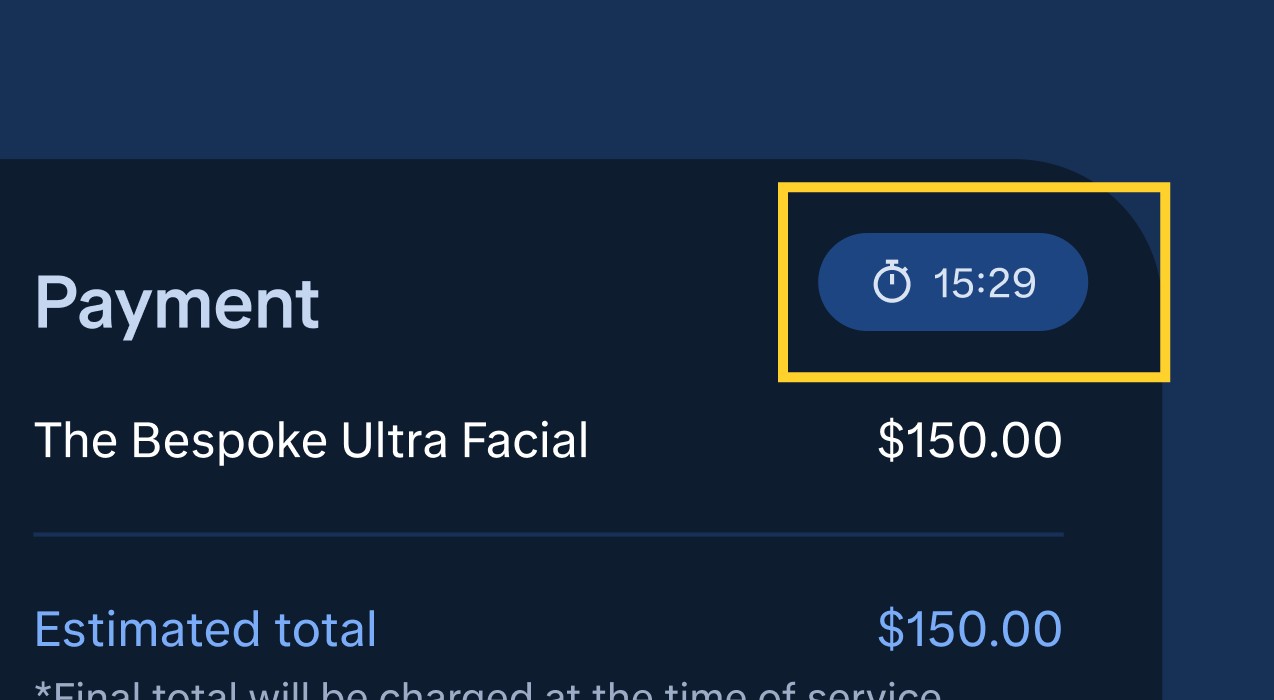
A Visible Timer Eases Inventory Anxiety
Finding
During live event checkout, people worried about losing their seats while reviewing.
Iteration
Surfaced the partner's hold timer as a persistent badge in the header.
04
Touch Remains an Essential Backup to Voice
Finding
Most people paid by voice (11 of 14), but anyone near the screen still reached for touch.
Iteration
Built touch controls with full parity to voice.
Final Design
Visual Breakdown
Endpoints
Final Variations
Next Steps
The template rolls out across all 8 verticals starting September 2026, with partner integrations underway.